

A smile is one of the first details we notice on someone's face. Healthy, white teeth create an impression of youth, freshness, and self-confidence, which is why teeth whitening is one of the most sought-after cosmetic dental treatments today.
However, despite its popularity, in clinical practice we often encounter the same questions from patients: Does whitening damage the teeth? Will the result look natural? Is professional whitening really better than the products that can be bought in stores or online? The answer is very simple: when performed under the supervision of a dentist, professional whitening is a completely safe, effective, and predictable procedure that can significantly refresh your smile without compromising your dental health.
Why do teeth darken over time?
Throughout our lives, our teeth come into contact with various pigments every day that gradually change their color. Coffee, tea, red wine, tobacco, carbonated drinks, and intensely colored foods leave behind traces that accumulate in the teeth over time. In addition, the natural aging process leads to the gradual thinning of the enamel, causing the inner, naturally darker layer of the tooth to become increasingly visible.
Some pigmentations are only on the surface of the teeth and can be successfully removed with a professional cleaning. However, when pigments penetrate deeper into the tooth structure, regular whitening toothpaste or more intensive brushing are no longer enough.
How does in-office whitening work?
Professional teeth whitening is based on the application of hydrogen peroxide, an active substance considered the gold standard in cosmetic dentistry. Hydrogen peroxide penetrates the enamel and breaks down the pigments responsible for the darker color of the teeth. During this process, the pigments become colorless, so the tooth reflects more light and appears naturally brighter. It is important to emphasize that professional whitening does not wear down or damage the enamel. Only the shade of the tooth is changed, while its structure remains completely intact.
In-office whitening – the fastest way to visible results
For patients who want a quick and effective way to achieve a brilliant smile, we most often recommend in-office teeth whitening. Before starting the treatment, the dentist performs a detailed examination of the teeth and gums to determine if they are suitable for safe whitening. Healthy teeth and gums are the foundation for a successful result. After the examination, the gums are carefully protected with a special protective layer, and a hydrogen peroxide-based gel is applied to the teeth. Throughout the entire procedure, the dentist monitors every step of the treatment, ensuring the patient's effectiveness, safety, and comfort.
How much the teeth will whiten depends on their natural color, the type of pigmentation, and each person's individual reaction.
Professional at-home whitening
For patients who wish to whiten their teeth gradually at home, supervised at-home whitening is available. Unlike over-the-counter products, this procedure begins with the creation of custom trays that fit your teeth perfectly. This ensures the gel is applied evenly, resulting in a more uniform outcome and significantly reducing the risk of soft tissue irritation. The dentist determines the appropriate gel concentration and the duration of the treatment. The whitening process is carried out over several days to a maximum of two weeks, allowing for a gradual and natural lightening of the teeth.Many patients keep their custom trays after the treatment is complete to use them for occasional touch-up bleaching.
Professional whitening or store-bought products?
There are many pastes, strips, pencils, and various products on the market today that promise quick and easy results. While some products may remove surface pigmentation, they cannot achieve the same effect as a professional treatment.
Universal trays increase the risk of soft tissue burns, do not fit the teeth snugly because they are not made from an individual impression, the gel does not distribute evenly, it spreads onto the soft tissues, and the teeth are whitened unevenly.
More importantly, whitening without a prior dental examination is not safe.Untreated cavities, inadequate fillings, gum inflammation, or severe tooth sensitivity are conditions that must be addressed before starting treatment, as applying whiteners in these situations can further worsen the patient's condition.
That is precisely why professional whitening is not only more effective, but also significantly safer, as it is based on a detailed diagnosis and an individually planned treatment.
White Diet – An Important Part of Successful Whitening
Many people believe that treatment ends when they leave the dentist's office. However, the next 48 hours are just as important for the final result. Immediately after whitening, teeth temporarily absorb pigments from food and drinks more easily.
That's why the so-called white diet is recommended – a diet that involves consuming light-colored foods. Rice, chicken, turkey, fish, potatoes, eggs, yogurt, white cheeses, cauliflower, bananas, and water are an excellent choice during this period.
On the other hand, coffee, black tea, red wine, dark carbonated drinks, tomato sauce, soy sauce, beets, berries, and strongly colored spices should be avoided for at least 48 hours. The same goes for smoking, as nicotine can very quickly stain newly whitened teeth. These recommendations are temporary, but they have a major impact on the longevity of the results achieved.
Does the result last forever?
Frequently Asked Questions
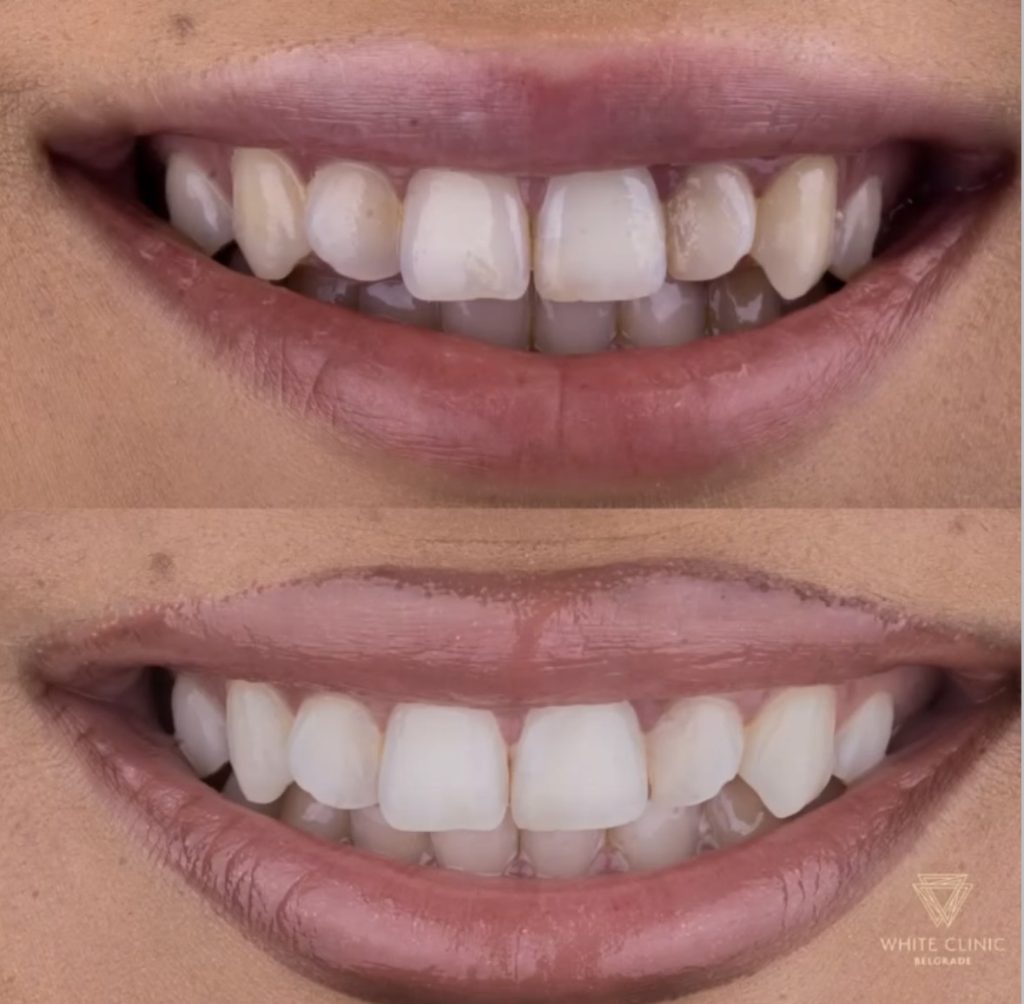
Before and after teeth whitening
More than an aesthetic treatment
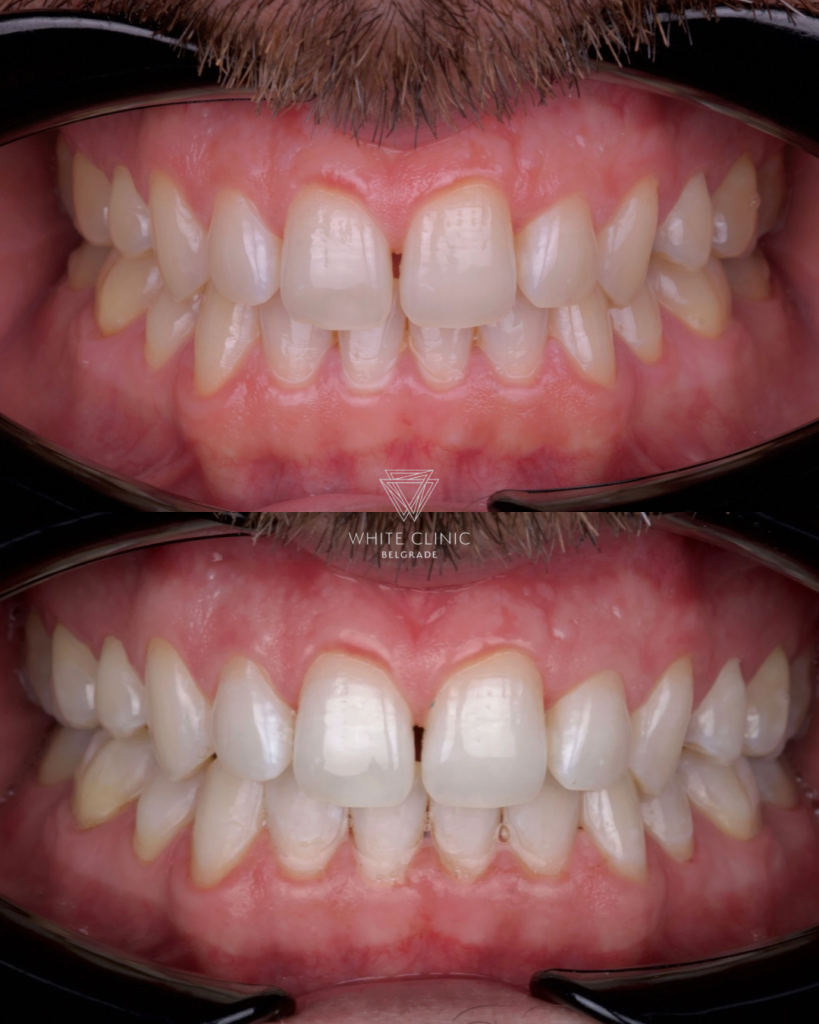
Safely to a perfect smile

Whiten your teeth safely Come to White Clinic Belgrade and see for yourself why this is the favorite method of modern dentistry.